01
A China-based project route for Australian brands
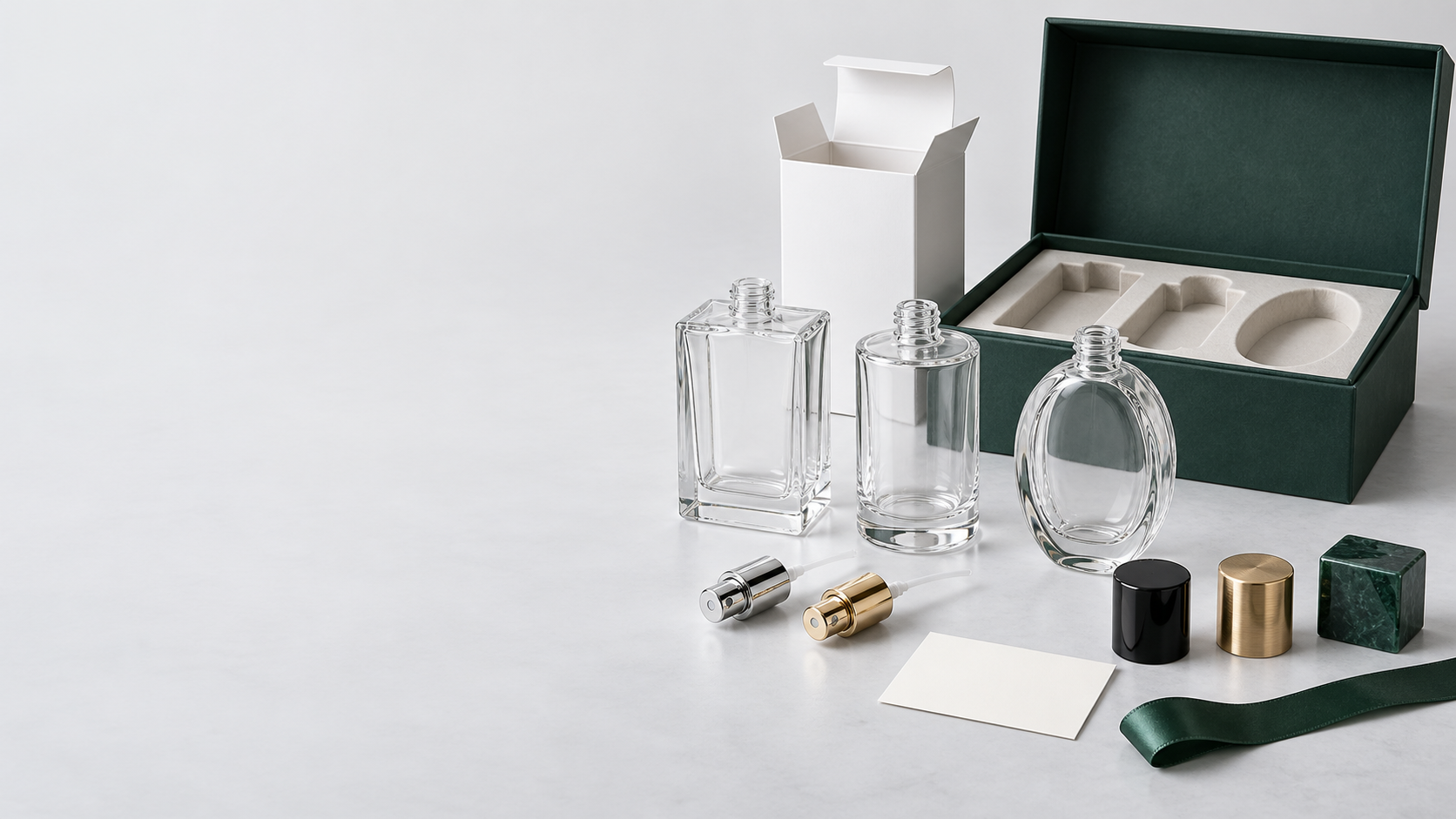
An Australian fragrance brand may need to balance a distinctive presentation with practical packed size, weight, protection, and order planning. YAMEI helps turn the brand direction into a coordinated empty bottle and packaging brief. The review can include bottle shape, material, pump, collar, cap, logo, coating, label, box, insert, samples, production follow-up, and delivery coordination.
YAMEI supplies and coordinates the empty packaging project from China. It does not provide perfume liquid, formulas, filling, finished perfume assembly, or flammable-liquid transportation. Freight method and cost are assessed after the final bottle, components, packaging, quantity, packed dimensions, weight, and destination are known.
02
Use existing structures for a focused market test
A market test does not always require a new bottle mold. An existing bottle shape, compatible pump and collar, selected cap, and a proven box structure can leave more attention for the brand details that matter at launch. This route still requires review: an existing shape does not mean every decoration, cap, or packaging process is available at every quantity.
Catalogue combinations start from 300 pieces. Logo printing or color coating requires 500 pieces. Handmade bottles start from 500 pieces and 30ml; pricing depends on complexity. New custom caps and spray pumps require 5,000 pieces plus mold fees.
03
Protect the complete set from bottle to box
The packaging direction should be considered with the fully assembled empty bottle. Cap height, pump and collar arrangement, bottle weight, maximum width, and insert contact points affect protection and packed volume. A box that looks suitable around the bottle body may not fit the cap or provide enough support during handling.
YAMEI can review folding cartons, lid-and-base structures, drawer boxes, rigid presentation boxes, paperboard inserts, EVA, foam, molded pulp, and other available directions according to the project. Material, printing, hot stamping, embossing, surface finishing, structure, sample requirements, and packaging quantity all affect feasibility and cost.
04
Create recognition with a controlled set of details
A brand does not need to customize every part at once. Logo printing, a selected color or coating, frosting, a label, a cap direction, or a strong box finish can be prioritized according to the launch brief. The best combination depends on the surface, material, dimensions, artwork, process, sample result, and quantity.
Bottle components must be selected as a system. The neck, pump, dip tube, collar, cap, and box insert cannot be combined only by visual similarity. Specifications and samples should confirm the fit before the project moves into production. YAMEI coordinates the empty component and packaging review rather than promising that any reference image can be reproduced exactly.
05
What to prepare before an Australia project review
A clear brief helps separate packaging priorities from delivery assumptions. Provide the items below, and explain which details can be adjusted. If a complete drawing is not available, reference images and a short written description can still support an initial review.
- Expected quantity, bottle capacity, destination market, and target launch timing
- Preferred material, bottle references, and acceptable existing-shape alternatives
- Logo artwork, color or coating direction, label requirements, and cap preference
- Box structure, insert material, dimensions, printing, and surface finishing priorities
- Reference bottle, sample, dimensions, sketch, drawing, or 3D file if available
- Any delivery, protection, packing, or presentation issue from an earlier project
06
Sampling, quality follow-up, and delivery coordination
Samples are used to review the physical bottle, component fit, decoration, box construction, insert support, and removal experience. Sample fees and logistics costs apply. A sample does not establish a fixed production price or guarantee that a later process change will have the same result.
After the requirements and samples are confirmed, YAMEI coordinates production follow-up and quality checks for the empty bottle and packaging project. Delivery planning uses actual packed data rather than a generic promise. The final route depends on quantity, protection, volume, weight, destination, and the selected production process.
07
When to move beyond the semi-custom route
A new bottle structure, custom mold, unusually complex cap, or entirely new packaging mechanism may require a separate development review. These requirements can change tooling, sampling, development effort, and practical quantity. A larger project can still use existing structures; 2,000 or more pieces does not automatically mean a fully custom route.
If the project already has a technical drawing, physical sample, or original bottle design, submit it through the existing-design inquiry. YAMEI can compare that design with an existing route before the team commits to a new mold. Catalogue combinations start from 300 pieces; logo printing or color coating starts from 500. Handmade bottles start from 500 pieces and 30ml. New custom caps or pumps require 5,000 pieces plus mold fees.
Project Questions
Frequently Asked Questions
Does YAMEI keep perfume bottle stock in Australia?
No. YAMEI is based in China and does not present a local Australian warehouse or fixed finished-goods inventory. Existing bottle shapes and production options are reviewed for each project, then availability and scheduling are confirmed.
Why should Australian projects review packed volume and protection early?
The final bottle, cap, pump, box, and insert affect packed size, weight, protection, and delivery planning. Reviewing the complete empty package early helps the project compare practical packaging directions without promising a fixed freight cost or route.
Can an Australian brand start with an existing bottle?
Yes. An existing bottle shape with focused branding can be reviewed for a market test or first launch. Catalogue combinations start from 300 pieces; logo printing or color coating starts from 500. Handmade bottles start from 500 pieces and 30ml. New custom caps or pumps require 5,000 pieces plus mold fees.