
01
Parts of a perfume bottle: names and functions
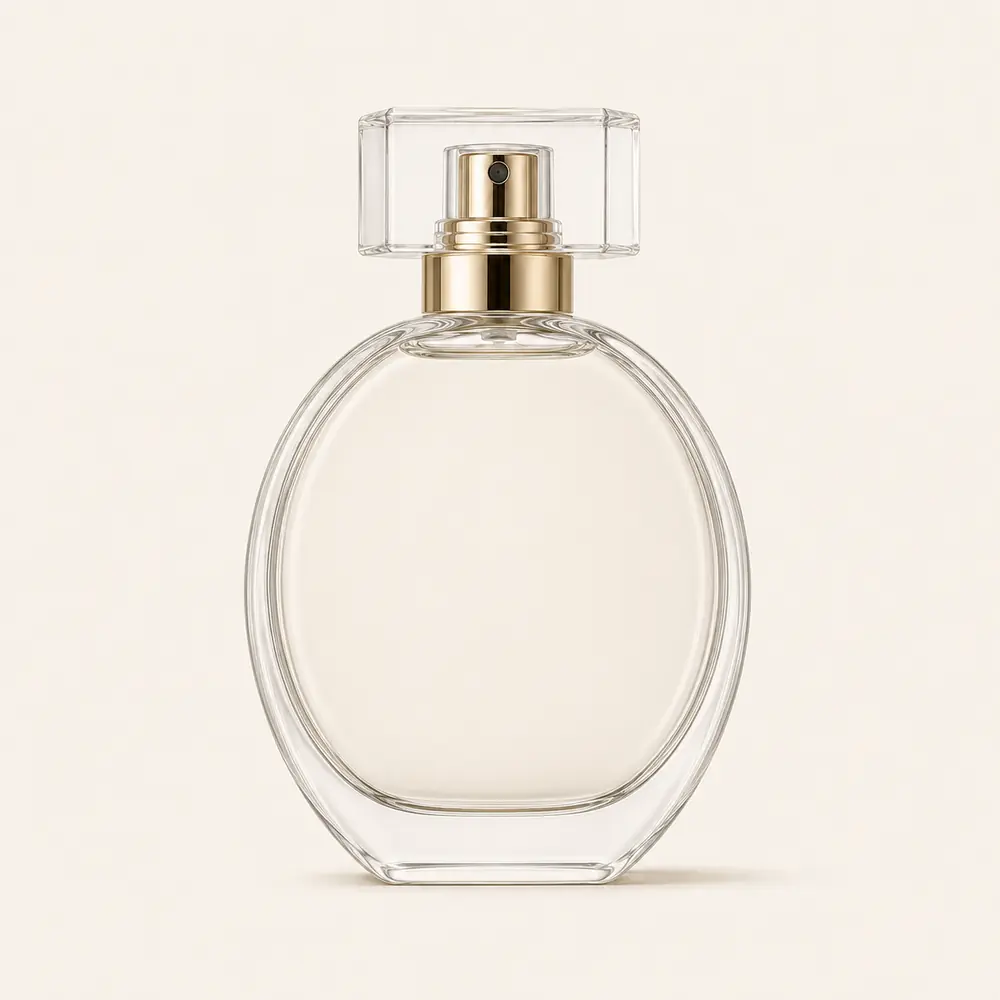
The main parts of a perfume spray bottle are the bottle body and neck, spray pump, actuator and nozzle, dip tube, collar, and protective cap. The box and insert are outer packaging rather than parts of the spray mechanism.
The bottle holds the product after filling by the customer or its appointed filler, but YAMEI supplies the empty packaging only. At the top of the bottle, the neck defines how the spray system attaches. The spray pump includes the actuator and internal mechanism. A dip tube extends toward the bottle base. The collar covers or supports the neck area, and the cap protects the actuator and completes the silhouette.
Additional parts may include an inner plug for certain bottle systems, a decorative cap insert, a label, or other reviewed components. The complete assembly then determines the required box and inner tray. Each part has dimensions, tolerances, materials, finishes, and installation conditions. A reliable project records these specifications instead of combining components only from photographs.
1. Bottle and Neck
Glass or plastic body with a defined neck finish, opening, and attachment method.
2. Spray Pump
Compatible pump mechanism and actuator selected for the bottle neck specification.
3. Dip Tube
Tube length adjusted to the internal bottle height and base geometry.
4. Collar
Visible or structural component that coordinates the neck and pump area.
5. Bottle Cap
Closure designed around internal diameter, retention, pump clearance, and final height.
6. Box and Insert
Packaging developed around the completed empty bottle assembly and its protection needs.
02
Glass or plastic bottle body
Glass and plastic bottles can both be considered for fragrance packaging, but they differ in weight, feel, transparency, shape availability, tooling, decoration, and shipping conditions. The material choice must be connected to the project quantity, intended appearance, component system, use, protection, and budget. Neither material is automatically the correct solution for every brand.
The bottle body also establishes the decoration area and dimensional reference for packaging. Curved glass, faceted surfaces, flexible plastic walls, heavy bases, and unusual shoulders affect printing and handling differently. Before components are approved, the actual neck drawing or specification and representative bottle samples should be available for fit testing.
03
Crimp neck and screw neck systems
A crimp neck bottle uses a pump that is secured around the bottle neck with compatible crimping dimensions. A collar normally covers the attachment area and contributes to the finished appearance. The bottle neck, pump cup, crimp specification, collar, and cap must be designed as a coordinated system. A crimp pump cannot be selected only because its actuator has the desired color.
A screw neck bottle uses a threaded attachment and a matching screw pump or closure. Thread diameter, pitch, seal, torque, and visible finish require review. Screw systems can support different assembly needs, but they are not automatically interchangeable with crimp components. The chosen neck also affects filling-line arrangements managed by the customer, even though YAMEI does not provide filling services.
04
Spray pump and dip tube compatibility
The pump must match the bottle neck and intended empty-package specification. Actuator shape, pump output direction, materials, gasket, finish, and attachment method can affect both function and appearance. Technical compatibility takes priority over matching a visual reference. A selected pump is confirmed through specification review and samples rather than assumed from a product photograph.
The dip tube is cut according to internal bottle height, shoulder geometry, and base shape. A tube that is too short cannot reach the lower area, while one that is too long can bend incorrectly or affect assembly. Final tube length should be checked on production-representative bottle samples. YAMEI coordinates the empty component specification but does not test or provide a customer fragrance formula.
05
Collar and bottle cap fit
The collar can cover a crimped neck, create a metallic transition, or support a particular visual proportion. Its internal dimensions and installation method must suit the pump and neck. Surface finish, color, and edge detail should coordinate with the cap and bottle decoration. A visually similar collar may not fit a different pump or bottle specification.
The cap requires enough internal clearance for the actuator and collar while remaining stable during handling and packing. Inner diameter, overall height, retention method, wall thickness, weight, and material influence the fit. Decorative caps may include several parts or special finishes and can introduce separate tooling and MOQ. Their final dimensions must be included when the packaging insert is developed.
06
Box and inner tray compatibility
Packaging dimensions should be based on the completed empty bottle, not the nominal capacity or bottle body alone. Measure total height with the cap, maximum width or diameter, depth, and the points where the insert can safely support the bottle. Heavy caps and irregular shapes affect balance and removal. Decorated surfaces should not rub against tray edges during normal packing.
The insert may use paperboard, EVA, foam, molded pulp, or another reviewed direction depending on protection, presentation, material goals, and quantity. Finger access and cap clearance matter as much as the cutout shape. A structural sample is used to confirm fit before printed packaging is approved. Bottle, component, and box tolerances should be considered together.
07
Why samples and compatibility records matter
Perfume bottle components can come from different production suppliers. That is common, but it makes controlled specifications essential. Neck drawings, pump details, cap dimensions, color references, approved samples, and packaging measurements create a record that production can follow. Substituting a component without review can change installation, appearance, box fit, or quantity.
A sample assembly confirms that the physical components work together before the complete project moves forward. Decorative samples then confirm coating, printing, metallic color, and handling. YAMEI coordinates this review for empty bottles and packaging. It does not claim that a visual reference alone proves compatibility, and it does not provide perfume liquid filling or finished perfume assembly.
08
Prepare a component enquiry
Provide the bottle capacity, material, neck specification if known, expected quantity, target pump and cap appearance, decoration, packaging, reference images, and timing. If a bottle already exists, include clear neck photographs, complete dimensions, and any supplier drawings. If the cap is original, include internal and external information rather than an exterior rendering alone.
Use the perfume bottle configurator when the project begins with bottle selection. Use the complete-set route when the bottle and packaging must be developed together. The submitted direction becomes a starting point for compatibility, samples, MOQ, and quotation review. It is not an instant component match or a guarantee that every selected visual can be combined exactly as shown.
- Bottle capacity, body dimensions, material, and neck type
- Pump attachment, actuator, finish, and dip tube information
- Collar and cap dimensions, material, color, and installation
- Logo decoration and coating direction
- Complete box and inner tray requirements
- Expected quantity, target market, and timing
Project Questions
Frequently Asked Questions
What do you call the spray part of a perfume bottle?
The spray assembly is commonly called a perfume atomizer or spray pump. The part pressed by the user is the actuator, and the nozzle is the outlet for the spray. The dip tube extends into the bottle; the collar and cap are separate parts of the closure system.
Can I enquire about a cap or pump without choosing a bottle?
Yes. Send the cap or pump reference you like and any bottle dimensions or photographs you have. YAMEI can review stock component matching after your inquiry. New custom caps or pumps require at least 5,000 pieces plus mold fees; existing stock components can be reviewed for smaller orders.
What is the difference between a crimp neck and a screw neck perfume bottle?
A crimp neck uses a compatible crimp pump and collar system secured around the neck, while a screw neck uses matching threads. The bottle neck and pump specification must be selected as a compatible system rather than by appearance alone.
Can perfume bottle components come from different production suppliers?
They can, but dimensions and installation requirements must be coordinated. Bottle neck, pump, dip tube, collar, cap, and packaging fit should be checked through specifications and samples before production.
Does YAMEI fill the bottles after the components are assembled?
No. YAMEI supplies empty perfume bottles, caps, pumps, collars, and packaging. Perfume liquid, formula development, filling, finished perfume assembly, and flammable-liquid transportation are not provided.